

Trent Turnham’s first job in fuel retail was filling fridges in the school holidays, standing on a milk crate to reach the shelves. His father had built a BP site with a couple of partners in 1997, and the business has been part of Trent’s life ever since.
Today Trent and his brother own three BP sites in south east Queensland, at Regents Park, Redland Bay and North Maclean, along with a car wash attached to one of them. Trent came into the business full time in 2010, and in 2015 the brothers bought their father out. Trent’s background is as a mechanic and his brother is an accountant, a combination that covers a lot of what it takes to run sites like these.
All three sites run on Beacon, and have for as long as Trent can remember. “It would have been something my father put in, somewhere around 2006,” he says.
A Hands-On Approach Across Three Sites
Two of the sites are within ten minutes of each other, and the third is about 15 minutes from Trent’s home. Most days he gets to two of them, and he has done all three in a day plenty of times. “You’re better off staggering it so you get a longer period at each,” he says. “Sometimes there’s a major problem at one and you won’t get anywhere else for a couple of days.”
Day to day operations sit with Nick, their operations manager, who has been with the business for almost 20 years. That leaves Trent and his brother to oversee the bigger picture: repairs, maintenance and upgrades. “Things are manageable when it’s smooth sailing,” Trent says. “But as soon as there’s a problem, you’re stretched. That’s why Nick’s role is essential, because more often than not, we’re navigating through some version of rough water.”
Staff Are the Biggest Asset
Most operators name staff as their biggest challenge. Trent sees it differently. “Everybody says staff are your biggest challenge, but they’re also your biggest asset,” he says.
The business has a lot of long-term team members, and Trent puts that down to looking after them: being fair with hours and working around people’s lives. “Even though it’s a casual role, people still need stability,” he says. “We really try to look after our staff, and they look after us back.”
The Challenges Beyond Your Control
For Trent, the hardest things are the ones no operator can fix: COVID, a cyclone, extreme weather and road changes. “Service stations are extremely exposed to roadworks,” he says. “As soon as they change a road, it can have a massive impact on your business if it goes the wrong way.”
This year has added the most volatile fuel pricing he has seen. Customers might think a higher price on the board means the service station is making more money, but Trent says the opposite is true. “Customers put less in each time they fill up, the fuel costs us more to buy, and the margin is lower,” he says. “If the price triples, you need three times the capital to buy the same load.”
Falling prices bring their own problem. Sites can hold large quantities of fuel underground. If the market drops suddenly, as it has this year, a site can be left holding fuel it paid more for than competitors are selling it for. “Nobody wants to buy something and sell it at a loss,” he says.
Twenty Years on One System
Beacon has changed ownership since Trent’s father put it in, and Trent has only good things to say about it. “Since the last ownership change, Beacon has been outstanding, absolutely outstanding,” he says. “The company has really shone since then.”
Part of that is the people who stayed. He names Kesavan, Megan, Tim and Cem among the long-serving team. “They’ve got a wealth of knowledge, and it would take a long time for someone else to gain what they have,” he says. “It’s really good that the anchors have stayed.”
Reports from Any Site, or from Home
Rather than running Beacon’s Head Office package, each site has its own Beacon system, and Trent logs in remotely to monitor and report. Head Office is something he has looked at, and he says he would add it if they took on a fourth site. For now, the setup works because the owners are on site so often and Beacon is easy to use. “I can go to Beacon at any site and pull a report or do anything I need very easily,” he says. “Even if I’m at home, I just remote in.”
His favourite report is stock performance. “It shows you what’s performing well and what’s not performing at all,” he says. Staff at the counter might know what sells, but an owner needs the numbers, and the report puts a month of sales for any line in front of him straight away.
Tank Levels Without the Dip
The Beacon feature Trent uses most is one of the newer ones: live tank levels. Only one of the three sites has an automatic tank gauge, so at the other two, Beacon works out what’s in the tanks from the daily dips and the litres sold since. “Instead of going out there, setting up witches’ hats and dipping the tanks, it’s click Beacon, and the tank levels are up,” he says.
If stock is getting low and he needs an exact figure for a delivery, he’ll still dip. Otherwise, the screen tells him what he needs. It is only as good as the data entered, Trent says, but his team stays on top of it. “Everybody hates having to go and do a dip in the middle of the day, especially when the forecourt’s busy or it’s pouring with rain.”
Small Features That Add Up
Some of Beacon’s most useful features are small. When a new product line arrives, staff can scan the barcode straight into the back office instead of typing it in one digit at a time. That matters at Christmas, when a single invoice can carry 100 new lines. “Having that scanner probably cuts out nine tenths of the work,” Trent says. Across a year, those saved minutes add up.
Support When You Need It
For Trent, support is what makes a supplier worth keeping. “You need to be able to pick up the phone and say we’re having trouble and we’re not able to trade, and someone needs to be on the other end,” he says. “That’s where Beacon is good. If your POS is down, they’ll help you then and there.”
He also likes that Beacon listens. “If there’s something that could be better, we’ll suggest it, and they’ll do it,” he says. “You can’t say they need to improve, because they always are.”
Final Word
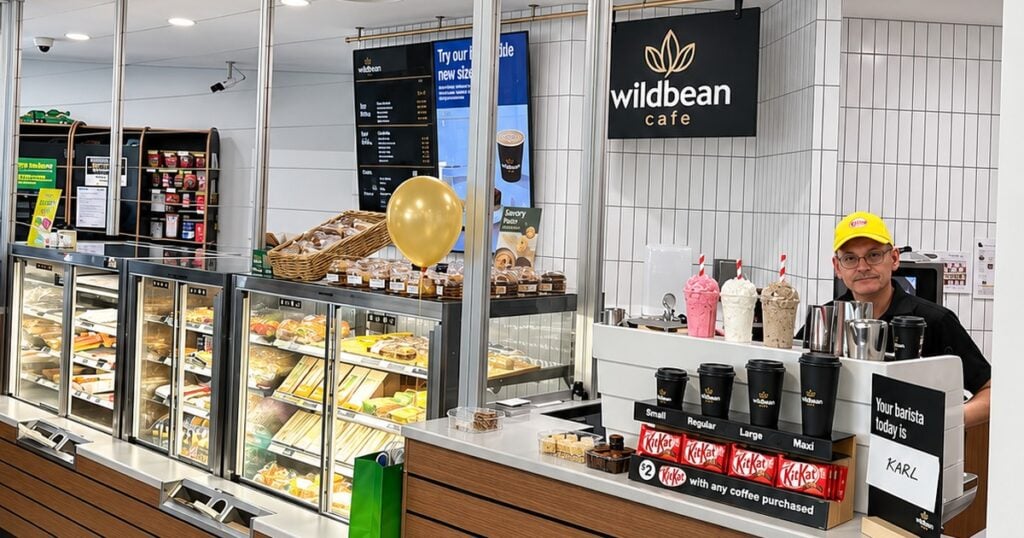
More sites aren’t on the plan. “The bigger you get, the less focused you end up,” Trent says. “I’d rather have a manageable portfolio and do it well.” If he did grow, it would more likely be another car wash, or something added to the sites he already has, like barista coffee.
His view of Beacon comes back to the same idea that runs through his own business. “If you listen to the people using it and give them what they need, you end up successful by default.”
For a family business that has run on Beacon for around 20 years, across three sites and two generations, that is a fair summary of why the system has stayed. “At this point, I’ll be teaching my kids to use it,” Trent says.