

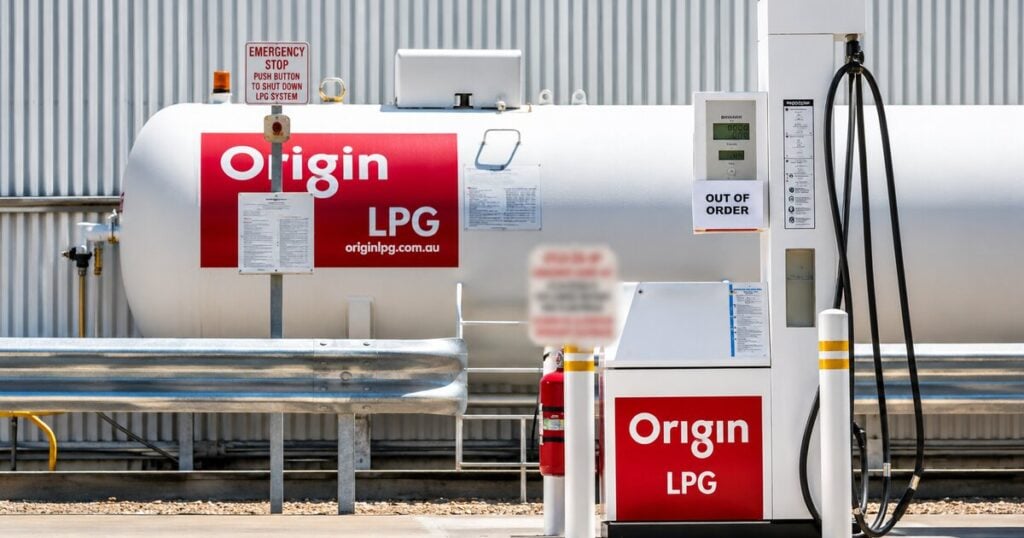
Horsham, the largest town in Victoria’s Wimmera region, no longer has a service station selling LPG. The last site offering it went into receivership last month, leaving drivers about 120 kilometres of driving, there and back, to the nearest LPG pump in Warracknabeal. It is a small-town story with a national pattern behind it.
An 87 per cent fall in volume
Australian LPG sales fell 87 per cent between 2011 and 2025, from 1.9 billion litres to around 242 million litres, according to the Department of Climate Change, Energy, the Environment and Water’s petroleum statistics, as reported by the ABC. Over the same period, diesel sales grew 48 per cent, reaching 33 billion litres in 2025.
Where the cars went
New LPG cars are no longer sold in Australia. The last factory LPG Falcons and Commodores, and the taxi fleets that ran them, have largely left the road. Around 51,000 vehicles now run on LPG or natural gas alone, according to the Bureau of Infrastructure and Transport Research Economics (BITRE), as reported by SBS. LPG supplier ELGAS puts the number of LPG vehicles, including dual-fuel, at around 200,000, down from approximately 500,000 in 2013.
Western Australia’s Consumer Protection division points to the end of government conversion rebates in 2010, the introduction of fuel excise on LPG, more fuel-efficient petrol engines, and the rise of hybrids and electric vehicles.
The shrinking network
The number of sites selling LPG has followed demand down. In Western Australia, LPG outlets fell from 329 to 50 over a decade, according to WA Consumer Protection. SBS reported fewer than 200 LPG sites in New South Wales and 637 in Victoria, based on government fuel price apps.
Regional areas are losing coverage fastest. WA’s Great Southern region has no LPG retailer left, and only two remain between Yanchep and Geraldton.
The margin problem
Lower volume pushes the cost per litre of running an LPG installation up. WA Consumer Protection said remaining outlets had raised their retail margins to stay profitable, but that “most, if not all, are currently operating at a loss with this product”.
Compliance is part of the cost. Alison Akers, who owns the Timberland General Store in Heyfield, Gippsland, told the ABC her site sold 15,000 litres of LPG a month a decade ago and now sells 3,000.
“For the volume we turn over it costs more to keep the safety red tape up to specs than what we make on it,” she said. She has kept LPG for the local customers who still rely on it.
What sites are doing instead
Most operators are choosing not to replace LPG tanks when they reach the end of their life. The forecourt space usually goes to parking, which supports shop sales, or to new offers such as EV charging where the power supply allows. Some regional sites are keeping LPG as a service to their community, even at a loss.
A note for independent operators
The decision usually comes down to the tank’s end of life. Before then, work out your LPG litres and margin, who owns the equipment under your supply agreement, and the cost to replace compared with the cost to remove. As Horsham shows, the last site selling LPG in a region captures every remaining customer for a long way around, which can change the answer.