
A report backed by Viva Energy and the Australian Workers’ Union says Australia is “dangerously unprepared” for another global fuel crisis and could lose its last two refineries without a 20-year government commitment. The warning lands with national diesel stocks at 31 days and pump prices still near their highs, and every independent who buys from a terminal is exposed to how it plays out.
The report
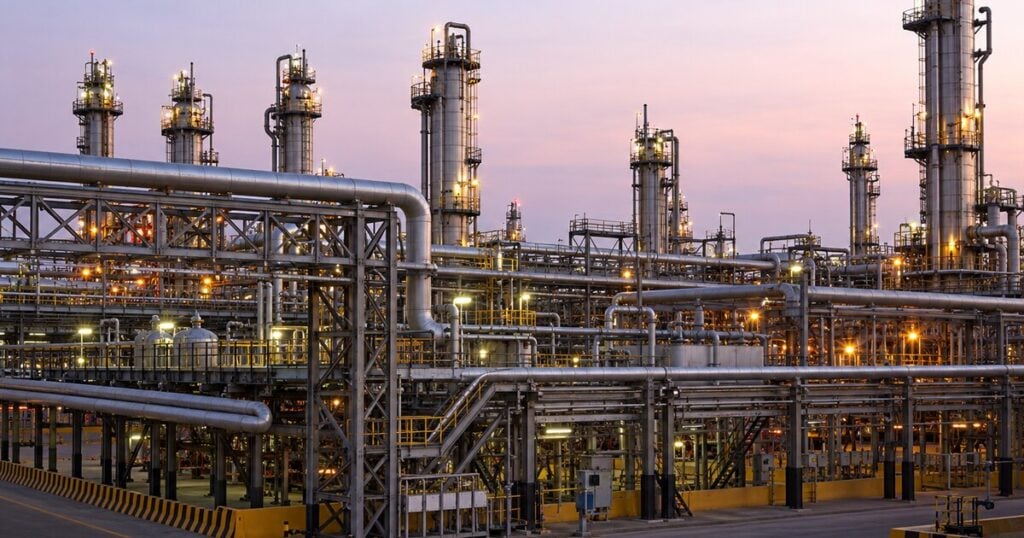
The report was published by the John Curtin Research Centre, a Labor-aligned think tank, and reported by The Sydney Morning Herald on 29 October. It says Australia imports about 80 per cent of its refined fuel. Domestic refining capacity has fallen 70 per cent since 2012, and six of the country’s eight major refineries have closed. The two that remain, Viva’s Geelong refinery and Ampol’s Lytton refinery in Brisbane, supply about one fifth of the nation’s petrol, diesel and jet fuel.
It makes eight recommendations. They include:
- a 20-year commitment to domestic refining
- reserves that are “strategically located and readily accessible”, rather than simply larger
- a national workforce plan
- locally made renewable diesel
The Herald also reported that the Fuel Security Services Payment, the refinery support scheme worth about $2 billion, has paid out just over $37 million in its first five years. [CHECK the SMH wording before quoting: the full article is paywalled and was read through a syndicated copy.]
The stock on hand
The federal government’s figures, published on fuelplan.gov.au (as at 20 October), show:
- stock cover: 39 days of petrol, 31 days of diesel and 28 days of jet fuel
- at least 3.0 billion litres of crude and fuel due to arrive over the following four weeks
- the national fuel plan at Level 2
On 23 October, 90 of the 8,167 retail sites tracked reported fuel outages, with Queensland the worst affected.
Lytton’s slow restart
Ampol’s third quarter update said further repairs to Lytton’s catalytic cracking unit would push the restart out to mid-November. Petrol, diesel and jet output for the quarter is expected to be about 150 million litres below plan. Ampol said it does not expect customer fuel supplies to be affected, and the government’s fuel plan says the shortfall is covered by supply already secured. Lytton’s refiner margin was US23.92abarrelforthequarter,againstUS10.64 a year earlier.
The import bill
The Climate Council, an advocacy group, released its “Crude Awakening” scorecard on 28 October. It estimates Australia paid an extra $9 billion for imported diesel between March and August, about $324 per person. Imports cover about 90 per cent of diesel use. Diesel averaged $2.77 a litre across the five largest cities on 21 October, about 100 cents above its level before the conflict began in February.
What government has committed
The 2026 to 2027 Budget included a $14.8 billion Fuel Security and Resilience Package. Within it:
- a $3.2 billion government-owned Australian Fuel Security Reserve, holding about one billion litres of diesel and jet fuel and announced on 18 August
- a 10-day increase in the minimum stockholding obligation for all three fuels by 2030
Separately, the federal and Western Australian governments are jointly funding a $4 million pre-feasibility study, announced on 28 July, into a new refinery proposed by Perdaman in Western Australia. It would be the first built in Australia since the 1960s. ServoPro could not find a public government response to the new report at the time of writing.